Ireland's Military Story

Category: UN Peacekeeping

  • In the Service of Peace – Congo Veterans

    In the Service of Peace – Congo Veterans

    In the Service of Peace – Our Congo Veterans

    Photos by John O’Byrne

    It was great to spend the day recording the personal accounts of veterans from Ireland’s deployment to the Congo (1960 – 1964) with Opération des Nations Unies au Congo (ONUC). Seamus Ua Trodd, Thomas Gunn, Noel O’Neill, Shay Delaney, and Gregory Leech recalled their memories of service with the 1stInfantry Group, 34th 35th, and 39th Infantry Battalions. The memories of these men were remarkable. Wide and diverse recollections gave a full account of the Ireland’s service in the Congo and what the then young men or teenagers in some cases went through. The first time on a plane, long range patrols in a country the size of western Europe, the Siege of Jadotville, interaction and helping local people, movement controller for UN aircraft, and asking your comrades to write letters home for you.

    To us these UN veterans are a national treasure and their accounts should be recorded for future generations

    Thank you to the ONE Cathal Brugha for their support in this recording.

    This project is supported by the Community Foundation for Ireland. 

    You can support our projects by becoming a Patreon.

  • Secretary General Opens Irish Peacekeeping Museum

    Secretary General Opens Irish Peacekeeping Museum

    Secretary General Opens Irish Peacekeeping Museum

    Photos by John O’Byrne

    Ireland has a proud history of United Nations (UN) peacekeeping since its first deployment of observers in 1958. Since that time members of the Irish Defence Forces and An Garda Síochána have worn the blue beret on missions throughout the world helping to bring peace and stability to conflict stricken regions. Today Ireland holds a seat on the UN Security Council and this month its presidency. Providing advocacy and support for peacekeepers and assisting in the transition from military to civilian life is The Irish United Nations Veterans Association (IUNVA). With its Headquarters at Arbour Hill, Dublin, the charity has a network of branches and support centres throughout the country. Open to those who have served on UN missions, its members are proud of their peacekeeping history and regularly give tours and talks to schools. Over time donations of kit and memorabilia were made. Very soon the need for a museum was realised and the members began the process of converting the old school house into a museum.

    Today members of the Oireachtas, Defence Forces general staff, An Garda Síochána and UN veterans gathered to open a new museum dedicated to Irish peacekeeping. The Secretary General at the Department of Defence, Jacqui McCrum, and designate Chief of Staff, Major General Seán Clancy formally opened the museum.

    Secretary General at the Department of Defence, Jacqui McCrum unveiling the plaque, officially opening the Irish Peacekeepers Museum.

    The Secretary General congratulated IUNVA on their hard work on the museum and praised the organisation for their work in supporting veterans:

    “I am proud of the history of the Defence Forces participation in UN peacekeeping which informs Ireland’s worth on this issue. Both serving and retired members of our Defence Forces have played a significant role in serving the State at home and overseas. All members of IUNVA whether they are serving or retired have successfully completed a tour of duty with the UN force or organisation, Our success in a obtaining seat on the UN Security Council is due in no small measure to the service given by you IUNVA members.”

    Secretary General at the Department of Defence, Jacqui McCrum

    The museum tells the story of Ireland’s contribution to world peace and the experience of soldiers and police. Artifacts from the Congo, photographs from Cyprus, uniforms from an array of missions are only the start of the IUNVA museum. Complementing the museum is a beautifully restored Royal Ordnance QF 25pdr and a replica of a checkpoint as used on service in Lebanon. The museum is a credit to the members of IUNVA. Guests were treated to informative talks on Irish UN service and museum exhibitions by Mick Dillion, Richard Armstrong, Fran O’Shea, and museum curator Ronnie Daly. The historical collections and stories are too vast to tell today and we will be brining you an in-depth feature in the coming weeks. 

  • International Day of UN Peacekeeping 2021

    International Day of UN Peacekeeping 2021

    International Day of UN Peacekeepers 2021 – Leveraging the Power of Youth for Peace and Security

    #YOUTHPEACESECURITY

    We take the time today to think of all United Nations peacekeepers in the service of peace around the world. The day coincides with the first UN peacekeeping mission which was established on 29 May 1948, when the Security Council authorised the deployment of a small number of UN military observers to the Middle East to form the United Nations Truce Supervision Organisation (UNTSO) to monitor the Armistice Agreement between Israel and its Arab neighbours. Since then, hundreds of thousands of peacekeepers have served in over 72 missions.  Today there are currently 89,000 military, police and civilian personnel in 12 operations. We also remember today the more than 4,000 who have lost their lives while serving under the blue flag since 1948.

    Earlier this week on 27 May in a virtual ceremony, the UN Secretary General António Guterres, laid a wreath at the Peacekeepers Memorial on the North Lawn, UN Headquarters, New York. He presided over a ceremony in which the Dag Hammarskjöld Medal was awarded posthumously to the 129 military, police and civilian peacekeepers from 44 countries, who lost their lives serving in 2020 and in the first month of 2021. The head of the UN gave his condolences to the families: “We are forever in their debt… Their ultimate sacrifice will not be forgotten, and they will always be in our hearts.”

    UN Photo/Mark Garten. Secretary-General António Guterres attends the wreath-laying ceremony to Commemorate International Day of UN Peacekeepers 2021.

    The UN Secretary General paid tribute to peacekeepers around the world: “The challenges and threats faced by our peacekeepers are immense”, he said. “They work hard every day to protect some of the world’s most vulnerable, while facing the dual threats of violence and a global pandemic”.  

    The theme for this year is “The road to a lasting peace: Leveraging the power of youth for peace and security.” Tens of thousands of young peacekeepers (between the ages of 18 and 29 years) are currently deployed around the world and play a major role in helping the missions implement their mandated activities including the protection of civilians. 

    Ireland currently has 561 peacekeepers from the Defence Forces serving around the world. Irish troops were first deployed on UN peacekeeping operations in 1958 and since then, holds a unique record were not a single day has passed without Irish participation in UN peace support operations. Since Ireland’s first deployment, 87 members of the Defence Forces and a member of An Garda Síochána have lost their lives in the service of peace overseas.

    Minister for Foreign Affairs and Defence, Mr Simon Coveney paid tribute to Irish Peacekeepers stating: “Each year, the 29th of May, offers a chance to pay tribute to the contributions of uniformed and civilian personnel from around the world, who have served and continue to serve in UN peacekeeping missions. We remember and honour also those brave peacekeepers, including 88 Irish peacekeepers who have lost their lives in the service of peace. This year we acknowledge in particular that young people can be a positive force for peace and development when provided with the knowledge and opportunities they need to thrive. From climate action to peacebuilding, youth around the world have been demonstrating their commitment to a better future for all.”

    Earlier this week Ireland promoted the first women to the rank of Major General. Maureen O’Brien, will take up the appointment of Deputy Military Advisor to Under Secretary General for Peace Operations United Nations Headquarters, New York.

    In compliance with Covid guidelines a small wreath laying ceremony will take place today at the Irish United Nations Veterans Association Headquarters, Arbor Hill, Dublin.

  • The National Day of Commemoration

    The National Day of Commemoration

    The National Day of Commemoration

    Photographs by John O’Byrne

    The annual National Day of Commemoration took place today at 11:00a, today to commemorate all those Irishmen and Irishwomen who died in past wars or on service with the United Nations. The principal ceremony was held in the National Museum of Ireland, Collins Barracks, Dublin, with smaller events taken place around the country. The event is held on the Sunday closest to the 11 July, the date on which, in 1921, the Anglo-Irish Truce was agreed.

    Due to Covid 19, restrictions were in place and this years event was much reduced with no members of the public in attendance.

    During the ceremony the Taoiseach Micheál Martin TD invited President Michael D. Higgins to lay a wreath on behalf of the people of Ireland. Other invited guests include members of the Government, Council of State, elected Representatives, Diplomatic Corps, and Judiciary.

  • IUNVA Mark Peacekeepers’ Day

    IUNVA Mark Peacekeepers’ Day

    IUNVA Marks International Peacekeepers’ Day

    Photos by John O’Byrne

    The Irish United Nations Veterans Association (IUNVA) today marked the International Day of UN Peacekeepers at Arbour Hill. The earlier planned annual commemoration to coincide with 29 May (UN Peacekeepers Day) was cancelled due to Covid-19 restrictions. Today’s event was in full compliance with Covid-19 guidelines.

    The International Day of United Nations Peacekeepers, offers a chance to pay tribute to the uniformed and civilian personnel’s invaluable contribution to the work of the United Nations and to honour more than 3,900 peacekeepers who have lost their lives serving under the UN flag since 1948, including 102 last year.

    The Covid-19 pandemic has brought new challenges, but peacekeepers around the world are continuing their operations to the best of their abilities and supporting the governments and the local populations, despite the risk of Covid-19.

    The theme for this year’s Day is “Women in Peacekeeping: A Key to Peace” to help mark the 20th anniversary of the adoption of UN Security Council Resolution 1325 on Women, Peace and Security.

    As we commemorate the 20th anniversary of Security Council Resolution 1325 on Women, Peace and Security, we must do more to achieve women’s equal representation in all areas of peace and security. Together, let us continue to wage peace, defeat the pandemic and build a better future.

    Secretary-General António Guterres

    At Arbour Hill, United Nations veterans, Defence Forces personnel and members of An Garda Síochána paid tribute to the 96 Irish who lost their lives while on UN service, including civilian personnel, members of the Defence Forces and An Garda Síochána.

    Also today those in attendance marked the retirement of Assistant Commissioner of An Garda Síochána Patrick Leahy.

    John O’Byrne was there to capture the event.

  • Women in Peacekeeping: A Key to Peace

    Women in Peacekeeping: A Key to Peace

    Women in Peacekeeping: A Key to Peace

    Today marks the International Day of United Nations Peacekeepers. It offers a chance to pay tribute to the uniformed and civilian personnel’s invaluable contribution to the work of the UN and to honour more than 3,900 peacekeepers who have lost their lives serving under the UN flag since 1948, including 102 in 2019.
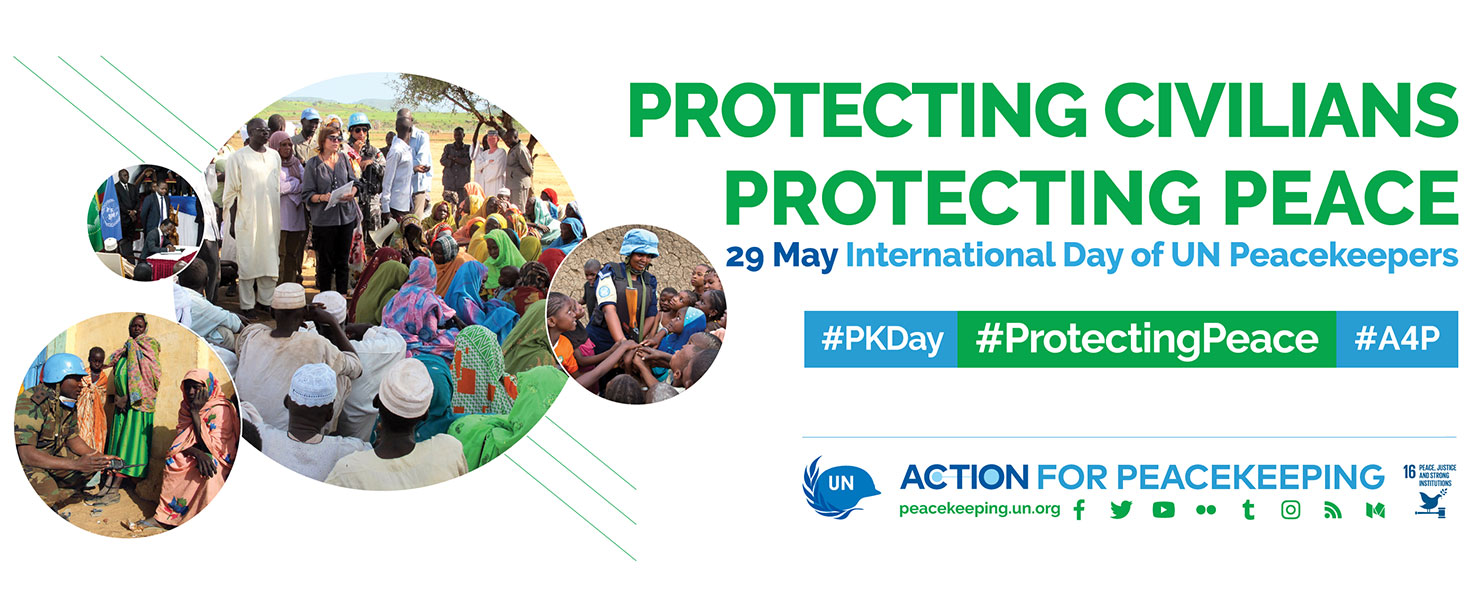
    This year, the challenges of the COVID-19 pandemic are great, however, throughout this time UN peacekeepers have continued to support and protect the people in the countries they are based in.

    To help mark the 20th anniversary of the adoption of UN Security Council Resolution 1325 on Women, Peace and Security, the theme for this year is ‘Women in Peacekeeping: A Key to Peace’.

    Through UNSCR 1325, ensuing resolutions, as well as the Action for Peacekeeping (A4P) Declaration of Shared Commitments, the UN has called for an expansion of the role and contribution of women in its operations.

    As we commemorate the 20th anniversary of Security Council Resolution 1325 on Women, Peace and Security, we must do more to achieve women’s equal representation in all areas of peace and security. Together, let us continue to wage peace, defeat the pandemic and build a better future.

    UN Secretary-General António Guterres

    The first UN peacekeeping mission was established on 29 May 1948, when the Security Council authorised the deployment of a small number of UN military observers to the Middle East to form the United Nations Truce Supervision Organization (UNTSO) to monitor the Armistice Agreement between Israel and its Arab neighbors. Since then, more than 1 million women and men have served in 72 UN peacekeeping operations.

    An Taoiseach, Leo Varadkar T.D, and the Minister with Responsibility for Defence, Paul Kehoe T.D, paid tribute to Irish peacekeepers currently deployed overseas under the constraints of COVID-19.

    Welcoming this year’s theme, the Taoiseach said:

    Since the first Irish troops first were deployed on UN peacekeeping operations in 1958, not a single day has passed without Irish participation in UN peace support operations. Over the past sixty two years, tens of thousands of Irish women and men have worn the blue helmets on UN peacekeeping operations. We are as proud of the blue helmet as we are of the harp or the shamrock.

    Today is an opportunity to pay tribute to the members of the Irish Defence Forces carrying out this critical work amidst the constraints of COVID-19. And I want to highlight in particular the central role of our female peacekeepers, including Brigadier General Maureen O’Brien, who is currently serving in the role of Acting Force Commander with the UNDOF mission in Syria.

    In paying tribute to the role played by Irish peacekeepers, Minister Kehoe remembered the peacekeepers who lost their lives on deployment.

    The Minister continued:

    This year is the twentieth anniversary of the landmark UN Security Council Resolution 1325 on Women Peace and Security, which put women’s’ rights and gender equality at the centre of global, regional and national peace and security efforts. Ensuring that the WPS agenda is implemented is therefore a timely shared priority across the common efforts of the UN, EU and NATO.
    The advancement of the Women Peace and Security agenda in peacekeeping operations is an area in which Ireland has taken a proactive role. The promotion of a strong gender perspective is a key element in all our peacekeeping operations. The presence of women contributes greatly with resolving conflict and connecting with local populations. It broadens the skills sets available within a peacekeeping mission and importantly provides role models for women, both at home and abroad. Equitable, durable and sustainable peace and reconciliation cannot be built without women at the table.

  • International Day of UN Peacekeepers

    International Day of UN Peacekeepers

    For millions in conflict-affected situations around the world, peacekeeping is a necessity and a hope. Let us work together to make peacekeeping more effective in protecting people and advancing peace

    UN Secretary-General António Guterres

    The United Nations General Assembly, in its resolution 57/129, designated 29 May as the International Day of United Nations Peacekeepers. This is the date when in 1948 the first UN peacekeeping mission named the “United Nations Truce Supervision Organization”, or UNTSO, began operations in the Middle East. This first mission was a deployment of a small number of UN military observers to monitor the Armistice Agreement between Israel and its Arab neighbors.

    Since then, more than 1 million men and women have served in 72 UN peacekeeping operations, directly impacting the lives of millions of people, protecting the world’s most vulnerable and saving countless lives. From Cambodia to El Salvador, Liberia, Sierra Leone, Timor Leste, and elsewhere, UN peacekeeping has helped countries move from war to peace.

    Today, in 14 peacekeeping operations on four continents, it deploys more than 88,000 military and police personnel — from 124 Member States — nearly 13,000 civilian personnel, and 1,300 UN Volunteers. Despite the size and breadth of its operations, peacekeeping’s budget is less than one half of one percent of global military spending. Peacekeeping has clearly proven to be a solid investment in global peace, security and prosperity.

    On this day, we pay tribute to the professionalism, dedication and courage of all the men and women serving in UN peacekeeping operations, and honour the memory of those who have lost their lives in the cause of peace. This year’s peacekeepers’ day was marked by the UN on Friday 24 May at UN Headquarters in New York. Secretary-General António Guterres laid a wreath to honour all fallen peacekeepers and presided over a ceremony for the posthumous award of the Dag Hammarskjöld Medal to 119 military, police and civilian personnel who paid the ultimate price while serving in peacekeeping operations in 2018 and early 2019.

    Óglaigh na hÉireann / Irish Defence Forces have been continuously deployed on UN peacekeeping operations since 1958. Ireland is the only nation to have a continuous presence on UN and UN-mandated peace support operations since 1958, with Irish peacekeepers highly respected internationally.

    Today we remember all those who lost their lives in the service of peace.

  • MEMOIRS OF A PEACEKEEPER – CoY SGt Henry ‘Harry’ Mulhern (Retd)

    MEMOIRS OF A PEACEKEEPER

    A Tour of Duty with 49th Infantry Battalion UNIFIL

    Company Sergeant Henry ‘Harry’ Mulhern (Retd) tells his story

    Published in Winter 2015

    The Irish Defence Forces peacekeeping role in South Lebanon is renowned throughout the world for its professionalism and bravery. At times under harrowing conditions the Irish peacekeepers have helped bring stability to a war-torn region. The first Irish infantry battalion (43rd Infantry Battalion) deployed to South Lebanon serving with the United Nations Interim Force in Lebanon (UNIFIL) in May 1978. The following are the personal accounts of Harry Mulhern in South Lebanon in the period March-November 1981 while serving with the 49th Infantry Battalion UNIFIL. They represent a window into the work of Irish peacekeepers working thousands of miles from home in the cause of peace at a time when communication home was no more than newspapers and letters from family. At the time Harry was a Company Sergeant with 2nd Garrison Supply & Transport Company in Mckee Barracks. Aged 35, Harry had previously served twice with the United Nations (UN) in Cyprus.

    The Last Day in Before Deployment

    On 27 April 1981, at Cathal Brugha Barracks, Rathmines, Dublin, the second contingent of the 49th Infantry Battalion were preparing for departure to South Lebanon. This last day of departure would be the culmination after weeks of preparation and training. It involved bringing together hundreds of soldiers from barracks around the country to form a single unit, all of them volunteers. By the time of departure, the soldiers, who would be working closely together for the duration of the six-month tour were well acquainted, had formed a bond and were ready for the challenges ahead. This last day would be filled with mixed emotions. Some of the personnel were seasoned travellers, having served a number of tours previously in Lebanon and elsewhere.

    Company Sergeant Henry ‘Harry’
    Mulhern,

    ‘The replacement of a Battalion or Infantry Group overseas is processed in three stages known as Chalks to allow for familiarisation and adaptation. This final day of preparation was a busy one for the administrative and operational supervisory staff. One of their priorities was to ensure that everyone due to leave presented themselves and final preparations were made for transport to Dublin Airport. Those reporting for travel came from every corner of the country having made their farewells to family and friends. Kit and baggage were already at the airport and loaded’.

    As the peacekeepers went through their final preparations, reports came in to Army Headquarters of a serious incident in the Irish Area of Operations (AO) in South Lebanon, with casualties involved. It did not take long for this news to filter down to the awaiting peacekeepers in Cathal Brugha.

    Later in the evening verification came that the incident in Lebanon earlier in the day involved a shooting and abduction of Irish personnel. ‘The casualty, a young soldier from Chalk One of our battalion was dead. This was shocking information. The young soldier who died was less than two weeks into his tour of duty. All of this information would have been included on evening news bulletins with names withheld. In 1981 there were no mobile phones and anxious families around the country started ringing military barracks asking questions following the public release of the report. A sombre cloud descended over all at Cathal Brugha Barracks’.

    A religious service was held in the Barrack Chapel. It was customary and traditional; on this occasion it was attended by the overwhelming majority of those leaving and was particularly poignant. It was later confirmed that Saighdiúr Singil Caomhán Seoighe (Kevin Joyce, 48th Infantry Battalion) and Private Hugh Doherty who had only arrived with Chalk One, had been attacked at their Observation Post (OP) and abducted. Doherty was later confirmed killed. Seogihe was never found.

    Despite the bad news the morale among the troops still held well. There was no question of people deciding not to go. That night all of the men enjoyed a final drink and sing along in the various mess bars and a good Irish steak.

    ‘A separate building in the airport was used in those times for military departures and with only those travelling present it was a quiet farewell to homeland. However, as we walked to the aircraft a group of women shouted and cheered through a side entrance, heart-warming stuff it was. We learned afterwards they were airport staff. We flew throughout the night into the early dawn and were well tended to during the flight by staff of Aer Lingus’.

    Lebanon or Israel?

    Originally due to land in Beirut, the flight had to be diverted to Tel Aviv, Israel. ‘We landed there safely and disembarked in beautiful sunshine. Officials kept us away from airport buildings while we waited for the transport convoy to Lebanon and the AO for the Irish Battalion. On the airport campus at Tel Aviv everyone was armed, military, civilian police and civilian airport workers. It was noticed that we still wore black berets and these had to be removed quickly as they resembled those worn by elements in the Middle East who were not friendly towards the Israelis’.

    In the early evening, the Irish peacekeepers departed for the Israeli/Lebanon border. There were long delays at the Naqoura crossing into Lebanon while diplomatic negotiations took place and the Israelis satisfied themselves that the Irish were indeed who they claimed to be. UNIFIL HQ was situated at Naqoura.

    ‘In the end they relented and we crossed into Lebanon where a heavily armed escort awaited. The final part of the journey was via a rural climbing landscape toward South Lebanon. Arriving late after dark, we were quietly welcomed by our comrades in position there. The atmosphere was sombre and tense, but by that time we were very tired and ready for sleep’.

    This was the beginning of Harry Mulhern’s six-month tour of duty.

    Valley of Total and the Transport Element

    At that time, the main Irish base was at Camp Shamrock on the outskirts of the village of Tibnin. The Irish Battalion was structured into HQ Company, three infantry companies (A, B and C), and an armoured Force Mobile Reserve (FMR). Peacekeepers rotated from this camp to outlying OPs. Camp Shamrock was well laid out with modern dining facilities, sleeping quarters, and showers. The area of Tibnin had its beauty and charm and the local people were warm toward anything Irish. The Irish peacekeepers were well respected as they watched over areas which were volatile and liable to flare up at any moment; the local and background knowledge they possessed; and the ability to communicate anticipated trouble all helped to prevent incursions into the area by armed factions.  

    Harry was based at the Valley of Total, the base of the Transport Element of the Irish Battalion and the Fuel Supply Depot for the entire UN force in Lebanon. The Valley at Total was situated about one kilometre from Camp Shamrock and the village of Tibnin. There was a petrol station with one resident family. The garage attached to the petrol station was used as workshops and technical stores by the transport element of the battalion. It was side-of-the- road operations with little facilities.

    ‘We had a fleet of very old American M50 and M35 Trucks, three Cherokee Jeeps, three water tankers, a couple of run arounds and a recovery vehicle. All of the vehicles (with the exception of the Cherokees) were old and in need of replacement. Conditions for the mechanics were very basic with major repairs and parts replacements taking place at the side-of-the-road and under very hot or very cold conditions depending on the time of year’.

    Harry with members of the 49th Infantry Battalion’s Transport Element

    The best-known vehicle and one of the most important for the Irish battalion logistically, was the MAM Diesel – a heavy duty tractor unit with two refrigerated containers. The MAM travelled daily to the Israeli border collecting supplies for the battalion. With a heavily armed escort it would travel daily out of the Battalion AO to Naqoura on the Israeli Border. This journey involved passing through territory, towns and villages under the control of the various armed elements including the Peoples Liberation Organization and Phalangists (members of the Kataeb party originally a Maronite paramilitary youth organisation). The Transport Element also operated a fuel supply service for all of UNIFIL.

    ‘Overseas the role of senior NCO has more responsibilities for example: maintaining the discipline and morale in far more difficult conditions than at home, keeping close contact with all of the men and dealing with any issues they might have in a supportive way. We lived in three prefab buildings; a primitive shower had been built and a television had been bought. There was nowhere to go in a mission area such as this apart from the danger of leaving the camp area, so you had to make your own entertainment. Weapons were always near at hand. Drivers carried loaded weapons at all times’.

    The Dangers of the Job

    Mid-summer, high in the mountains of South Lebanon, brought with it very high temperatures. The evenings though because of the altitude brought cooler conditions. In the Valley of Total those cool summer evenings brought welcome relief. ‘In the course of one of those evenings I was alerted by screams and shouting coming from the vicinity of the fuel supply area’. The Irish Transport Group held bulk stocks of petrol and diesel fuel and were the supply source for the various contingents of troops serving there at the time. Two underground tanks held in the vicinity of 9,000 litres of fuel. On this evening a Dutch military fuel tanker was loading fuel. It was pumped through an extending arm from source by an electrical pump. ‘

    ‘This pump had to be primed before use and was poor side-of-the-road technology. The Dutch driver was having trouble with the pump. It had stopped halfway through the fill. Trying to restart it he was joined by the Irish Petrol, Oil and Lubricants Sergeant, Paddy Denton, who was returning with a supply convoy from Naqoura. Paddy, familiar with the apparatus, set about re-priming the pump when it suddenly exploded covering him and the Dutch driver with burning fuel. A building which served as an office for the fuel Supply Staff quickly also caught fire’.

    Harry and the Transport Element at Total

    The bulk of the Irish transport personnel who were within shouting distance in the nearby football field heard the commotion and came running. At this time, the pump was ablaze and also part of the feed pipe to the tanker. It was a potentially serious and dangerous situation.

    ‘I had summoned help through the Battalion Operations Room (Sergeant Dave Abbott) who acted immediately. With the exception of three NCOs and myself all of the personnel were sent out of the danger area. Two of these NCOs, Sergeant Tom Flynn and Corporal Pat Looney ran towards the fire. While Sergeant Flynn mounted the vehicle, Corporal Looney ran to the end of the feed pipe (which was at this time on fire) and with heroic courage disconnected it from the tanker. Not having a normal ignition and start control Sergeant Flynn had some difficulty starting the vehicle. But in due course he succeeded and managed to move the vehicle out of the danger area. A third NCO, Sergeant Jim Burns stopped a passing armoured vehicle and loaded the injured aboard. By coincidence this vehicle was also Dutch’.

    The injured were brought to the Irish Medical Facility at Tibnin. Sergeant Denton had serious burn injuries to his upper body while the Dutch driver had significant but less serious injuries. A nearby Norwegian camp had a Fire Engine which was dispatched to the scene. It brought the fire under control before it could endanger the main fuel storage site. If the peacekeepers had lost control of the fire the outcome for the valley and the nearby village would have been grave.

    The events of that evening were one of many life-threatening situations encountered regularly on active duty in South Lebanon. But this critical situation was met with calmness and professionalism and in the case of Sergeant Flynn and Corporal Looney, with great courage and heroism. Commendations for the actions on the night by the NCOs who remained at the scene were received from the Commander of the Dutch Contingent and of course, the Irish Commander who received the personnel and personally congratulated them.

    ‘For the Irish Commander it was a relief, that rapid and decisive effective actions prevented a more serious outcome. This battalion had already incurred casualties in the course of the tour’.

    Incidents an incursions

    There were incidents and incursions on a daily basis during that period of UNIFIL. The effects of the 1978 Israeli invasion still lingered and tensions remained high across the border. Lebanon’s Civil War continued. As a result of both UNIFIL personnel regularly got caught in the middle of firefights, shellings, mines, and roadside bombs.

    ‘There were regular casualties as a result of these incursions. I remember the Fijian Battalion suffering more than most.  But the list of Irish casualties is a long one. At night we witnessed Israeli jets attacking targets in surrounding villages. Drones overhead gathering intelligence was a daily occurrence. On the coast Israeli gunboats would appear on the horizon to shell coastal towns and villages. The ancient city of Tyre suffered from these attacks because of its coastal location. I witnessed one of those attacks from the sea myself.

    Two members of the Irish Battalion attached to UNIFIL in a village close to Battalion Headquarters, Tibnin. May 1st, (UN Photo Archive/John Isaac)

    On one occasion three officers returning to the battalion area from Naqoura were attacked while travelling through the village of Qana. They came under fire from militia and two of the officers took cover while the third and most senior, Commandant Tony Egar, approached the militia trying to calm the situation. The armed element had just taken a casualty from another UN contingent and wanted revenge. A rocket was fired in the direction of Commandant Egar. It missed him and demolished a nearby house.  The Commandant tried to speak to them in French. The militia beat him with iron clubs. Eventually an older and senior member of the militia group appeared and stopped the attack.

    On another occasion two drivers travelling in a water truck were attacked by an armed man who jumped onto the running board of the truck and attempted to fire into the cab. They only escaped by driving through a barrier into the camp of another contingent. When they returned to Total the indents of the bullets fired could be seen in the rear of the truck’.

    The battalion suffered one more fatality after a driver from C Company was killed in a road accident.

    A visit by Minister James Tully TD

    During mid-Autumn the 49th Infantry Battalion received a visit from the Minister for Defence, James Tully TD. He was due to visit both Camp Shamrock and several of the outlining posts including Valley of Total. A major clean-up of the area was initiated and the men prepared their best uniforms, boots and weapons for inspection. 

    There was already some excitement among the Transport Group as one of their comrades (a young newly married man) had just received a communication that his wife had delivered their first child.

    ‘The lad was in a very emotional state and arrangements were being put in place for him to speak with his young wife by radio. (No mobile phones or Internet in those days) apart from letters it was total isolation from all matters to do with home for the duration of the tour. Visitors from home were, in those circumstances, very welcome.

    There was one local family living at Total, who looked after the small commercial petrol station located there. They were requested to stay away from the inspection area for the duration of the minister’s visit and readily agreed’.

    The Minister duly arrived around midday and was invited to inspect the assembled troops and accommodation. ‘As he walked through the troops, he stopped occasionally to speak to one of them.  “Is everything going well, can I do anything for you”? The answer invariably was ‘yes Sir everything is fine’. That is until he reached the young man who had just become a father who answered: “My wife and I just had a baby, could you get us a house”. A great silence descended on those assembled as the Minister looked to the senior officer accompanying him who also looked to his junior. However, the surprise only lasted seconds and the Minister smiled at the man saying, “I will see you before I leave the area and we’ll talk.” A sigh of relief all round and the visit proceeded’.

    This, however, was not the only surprise as the Minister prepared to leave one of the children of the family living at Total suddenly appeared. Dressed in her Sunday best she presented the visitor with flowers saying “my father and mother have prepared something for you upstairs” Again the Minister smiled and proceeded up the stairs to the balcony of the house. For security reasons these situations are avoided in the AO but in this instance the Minister agreed. Upstairs on the balcony he was presented to the whole and extended family, who were quietly slipped in earlier in the day. A feast of local Lebanese food and drink combined with the warmest of welcomes. It was a great coup for the family and the whole village would be impressed. Of the photographic record of the visit, this reception would add a pleasant memory’.

    After the Minister Tully’s visit to Lebanon, he continued to other arranged destinations and cultural visits in the Middle East. In that capacity he travelled to Cairo as Ireland’s representative in Egypt’s annual October 6th military victory parade. While in the reviewing stand, next to President Anwar Sadat, Minister Tully suffered a shrapnel injury to his face after Sadat was assassinated by members of the Egyptian Islamic Jihad who had infiltrated the Egyptian Army.

    ‘It was and is a very complicated area of conflict. The role of the UN peacekeepers is to keep the peace and maintain as far as possible a tolerable life for the population while politicians and diplomats try to make the permanent peace. The Irish are committed to this role’.

    Company Sergeant Henry ‘Harry’ Mulhern (on right) pictured at this years Michael Collins commemoration at Cathal Brugha Barracks. Harry is pictured with Eddie Burke and the 2nd Field Artillery Regiment Association mascot Corporal Kealagh.

    Harry returned home safely at the end of his tour. He retired from the Defence Forces in 1986 after 24 years service. To this day Irish peacekeepers still serve with UNIFIL in South Lebanon. You can read more about 2nd Garrison Company and stories about its members on: www. friendsofgarrison.com

  • War Along the Suez – Major General Vincent Savino

    War Along the Suez – Major General Vincent Savino

    WAR ALONG THE SUEZ

    Major General Vincent F. Savino (Retd) talks about his time along the Suez Canal as a UN Military Observer

    Cover image: A view of Observation Post Red, April 22, 1973, located East Side of the Suez Canal in Israeli-occupied Sinai. The U.N. vehicle in the foreground was destroyed during the 1969 shelling. (UN Photo/Yutaka Nagata)

    First published in Winter 2014 issue.

    Following the Israeli victory in the Six-Day War in June 1967 – the entire Egyptian Sinai Peninsula up to the eastern bank of the Suez Canal was left in Israeli hands. Egypt was determined to regain its lost territory. Rebuilding its military Egyptian President, Gama Abdel Nasser, launched the War of Attrition along the Bar Lev Line (a chain of fortified Israeli positions on the Eastern bank of the Suez Canal) on 8 March 1970. Back in Ireland, then Captain Vincent Savino was stationed in Defence Forces Headquarters and dealing with the emerging Troubles in Northern Ireland.

    President of IUNVA, Major General Vincent F. Savino (Retd) (Photo by Pat Nolan)

    “1969 saw the Defence Forces mobilising due to the situation in the North. I was located in the Quartermaster General’s office and believe me when I tell you it was mayhem. In the middle of all this, officers were being sought for a one-year tour of duty with the United Nations Truce Supervision Organization (UNTSO). I’d been in the Middle East before while serving in Cyprus some years previously and it caught my attention. We had had people wounded in the region and people were reluctant to go. Along with two others I volunteered in December of that year”.

    UNTSO is the UN’s oldest mission. It was founded on 29 May 1948, to monitor the ceasefire agreements following the Arab-Israeli War. Since then, UNTSO has expanded to supervise the General Armistice Agreements of 1949 and the observation of the ceasefire in the Suez Canal area and the Golan Heights following the Six-Day War of June 1967. To carry out its mission UNTSO deploys unarmed Military Observers. Following the Six-Day War, 90 such observers were deployed in the Suez Canal Sector.

    Selling his car and packing up his wife and six children Captain Savino headed off to Israel.

    “In those days there weren’t the allowances that there are now. Hence why I had to sell my car. We were given a $1½ extra a day.  I settled my family just outside Jerusalem in the Jordanian administered sector.” In Jerusalem, the observers were given a week to acclimatise at UNTSO HQ. They met up with other new observers and were briefed on the mission. The other new observers came from all over the world including Argentina, Austria, Chile, Finland, France and Sweden. “We met UNTSO Chief of Staff Lt Gen Odd Bull from Norway who went through the current situation. “I often think back to that week. Nothing could have prepared us for what we were about to go through.”

    At the end of the week the new observers left Jerusalem for duty along the Canal at 5am driving south to the UNTSO Control Centre at Kantara, which was some 40km from the line of Observation Posts (OPs). This leg of the journey took four hours. The Control Centre was responsible for all OP’s along the East Suez; of which there were seven at the time. Each OP was designated by a colour; Blue, Copper, Pink, Green, Silver, Orange, and Violet, On the West Suez in Egypt UNTSO OP’s were designated by the phonetic alphabet such as OP Echo and OP Foxtrot.  In theory, observers were meant to rotate between the OPs and the Control Centre every five days. They would soon learn this was not always to be the case.  “We received a briefing ‘you are going to OP Pink’. Myself and an Austrian officer were paired up. An armed Israeli Lieutenant was assigned to us as our liaison. Grabbing our kit bags and rations we were off again. Our convoy consisted of four jeeps. It was another two-hour drive to OP Pink. We were coming up close to our destination when over the radio, ‘Patrol Pink stop your vehicles firing ahead’. Stopping our vehicles we got out, put on our flak jackets and got in behind a sand wall. From the other side all we could hear was sounds of mortar fire and machine gun fire. I thought what the…. there’s a war going on. What am I doing here?”

    The Suez Canal links the Mediterranean Sea with the Red Sea. It is 193.30km (120.11miles) long, 24m (79ft) deep and 205m (673ft) wide. Its length and width have proven formidable obstacles during the conflicts between Israel and Egypt. “In parts you actually look up at the Canal. Because of the war the Canal was closed and several ships were trapped. In the desert you were looking up at a ship. It was bizarre.”

    With the Egyptians poised on the West Bank and the Israelis poised on the East Bank both militaries positioned themselves near to UN OPs in the hope that the opposing side wouldn’t fire on an area where the UN were located.

    A view of Observation Post PINK, 1973, located on the Eastern shore of Little Bitter Lake in Israeli-Occupied Sinai. (Photo: UN Photo/Yutaka Nagata)

    OP Pink was only a few hundred yards from the edge of the Canal located on the Eastern shore of Little Bitter Lake. It consisted of no more than a rundown caravan with a radio mast and a sandbagged bomb shelter. This was home for Captain Savino’s first week along the Suez. “There we were in the middle of a war radioing back to Kantara reporting on the shelling and airstrikes. Our first tour of duty lasted only seven days due to the constant shelling. We spent most of our time in the shelter which was an iron beehive construction with sandbags all around it. Crouched inside with the Austrian and the Israeli officer you had to sit there and listen to the shells landing all around. During long periods of shelling you were left with only army rations to eat. It was stressful at times”.

    OP Pink was eventually relieved after seven days and the observers rotated back to Kantara. Six days in Kantara and then back to the Canal. Daily routine in the OP’s began at 07:00. At this time Kantara transmitted the music of Lillibullero across the airwaves to wake everyone up. The OP’s responded by sending in their situation reports which gave the number of observed air attacks, tank and artillery shellings and small arms fire. “While on OP Copper I concluded my report by saying, ‘this is the 100th air attack reported by this OP.’ That was just over a six-day period.” To constitute an air attack the attack had to last 15 minutes, otherwise it was just a bombing.

    Officers at work in the Operations Room of Kantara Control Centre, originally located in Kantara East and now resited at Rabah in Israeli-Occupied Sinai. They are (foreground to background) Capt. Bjorn Dahlman of Sweden, Lt. Col. E. Lehtovirta of Finland, Officer-in-Charge, Kantara Control Centre, Capt. Fraz Foidl of Austria, and Capt. Yrjo Helanen of Finland. (Photo: UN Photo/Yutaka Nagata)

    The Egyptians primarily used Soviet made equipment, while the Israelis primarily used Western made equipment. In the air the observers witnessed Egyptian flown Russian made Mig’s and Sukoi’s up against Israeli flown Fouga Magisters, Mirages and Skyhawk’s. “We would watch as the Egyptians tried to build surface to air missile emplacements. The Israelis would fly in and take them out. One time we were sent to a crash site of an Israeli spy plane which had been shot down. When we got there parts of the plane and bodies were all over the place. We found parts of a Russian made missile with Cyrillic writing which had clearly shot down the plane”.

    “We saw it all. Heavy artillery fire, raids across the canal, aircraft coming in and dropping napalm, tank and artillery duels. All we could do was report each incident. When the firing started hitting close to us we would radio our fellow UNTSO observers on the Egyptian side and try and get them to tell the Egyptians to stop firing at us. I was lucky I never got hit bar a few scratches. During my time there we suffered five casualties. A Swedish officer and Argentinean officer were killed and three others badly wounded. We had several other minor injuries.”

    With the Israeli positioning themselves close to UN positions damage from Egyptian aircraft, artillery and tanks was inevitable. Kantara was so badly damaged that it had to be abandoned and a new Control Centre was established at an old railway station in Raba. At Raba, the observers had to work under canvass. Across from them was a Bedouin village. Two OPs were also withdrawn leaving five in operation.

    A relief party unloading food and petrol supplies at Observation Post PINK located on the East Side of the Suez Canal in Israeli-Occupied Sinai. Each Observation Post (OP) is manned by two UN Military Observers, generaly of different nationalities. The tour of duty at OPs is normally 6 days at the Kantara Control Centre area (KCC) and 4 days in the other areas. The longer tour of duty at the KCC OPs is due to the road distance between UNTSO Headquarters and the OPs. After each tour of duty at OPs, UNMOS return to the residence area for a few days of rest. (Photo: UN Photo/Yutaka Nagata)

    “The Israeli tank commanders would roll up on ramps behind the sand wall along the Canal. The minute their turret cleared the wall they’d fire and roll back down. This would go on and on. Once I saw this young tank commander in his turret with his head up. His tank rolled up the sandwall; he took out a can of coke, drank it and fired. They were doing this to provoke the Egyptians to return fire and give away their positions. During my time the Israelis were losing at least one soldier killed every day.”

    In the middle of rotating from OP to OP Vincent was able to take leave to Jerusalem to visit his family. “Having the family there was wonderful and a great relief. Once we got accommodation and schools sorted, they all had a lifetime experience. When I got leave we used to travel all over Israel, up into Damascus, Lebanon and over to Cairo in Egypt. I am delighted to say that the travelling bug has not left any of my children since”.

    The War of Attrition continued until August 1970 and ended with a ceasefire. The ceasefire lines remained the same as when the war began and with no real commitment to serious peace negotiations. With the end of the war the Suez became much calmer. Tensions however remained high between Israel and Egypt and sporadic firing across the Canal still took place. The UNTSO observers found themselves having to rebuild their bombed OPs and getting on with their mission. At the end of year one, now Commandant Savino was a Special Duties Officer responsible for looking after and improving the OP’s. “I was given the task of trying to improve the OPs. We were mixing cement, sometimes under fire, trying to make the shelters and living conditions that little bit better. This is all with a backdrop of the Canal, heat, sun and sand. Back then there was no internet or satellite TV. The people at home had no idea what was happening. It was some experience. One which I’ll never forget”.

    Commandant Savino then volunteered for an extension of another year. During that time he became an Assistant Operations Officer in the Control Centre and in the last few months an Operations Officer in charge of the area. In 1973 the region was torn apart again during the Yom Kippur War. Today UNTSO observers are still carrying out their mission in the Middle East. Over the years 18 observers have lost their lives in the service of peace, two of whom were Irish. Commandant Thomas Wickham was shot dead in Syria in June 1967 and Commandant Michael Nestor was killed by a roadside mine in September 1982 in Lebanon.

    Vincent Savino went on to serve until 1989 retiring at the rank of Major General. He is currently President of the Irish United Nations Veterans Association.

    “Peacekeeping is not a job for soldiers, but only soldiers can do it.”

    Kofi Annan, UN General Secretary 1997-2006

    Timeline of Events

    1859

    Construction starts on canal

    1922

     Egypt gains independence from Great Britain

    1948

     State of Israel declared

    First Arab/Israeli War

    UNTSO established

    1952

     Military Coup in Egypt

    1956

     Britain gives up Suez Canal after 72 years of occupation

    General Nasser is elected president of Egypt

    Suez Crisis

    1967

    Arab/Israeli Six Day War

    UNTSO extended to Suez Canal

    1970

    Captain Savino deployed to UNTSO

    Egyptian/Israeli War of Attrition

    1973

    Yom Kippur War