Memorial Plaque Unveiled in Bantry Honouring U.S. Naval Air Station Whiddy Island
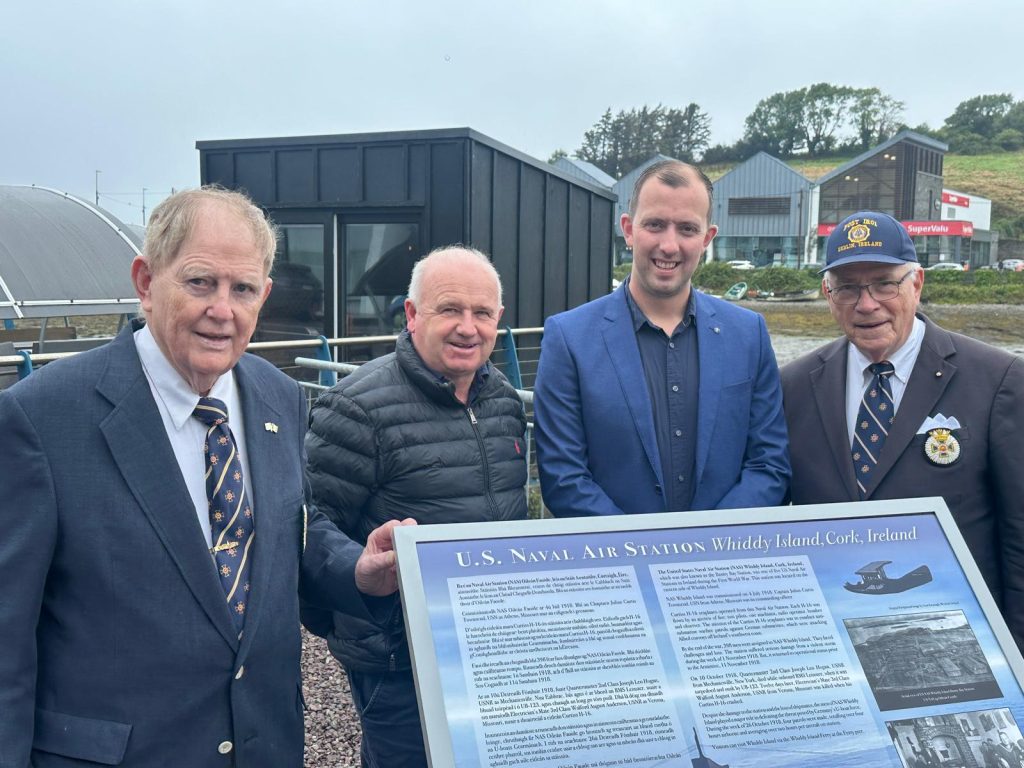
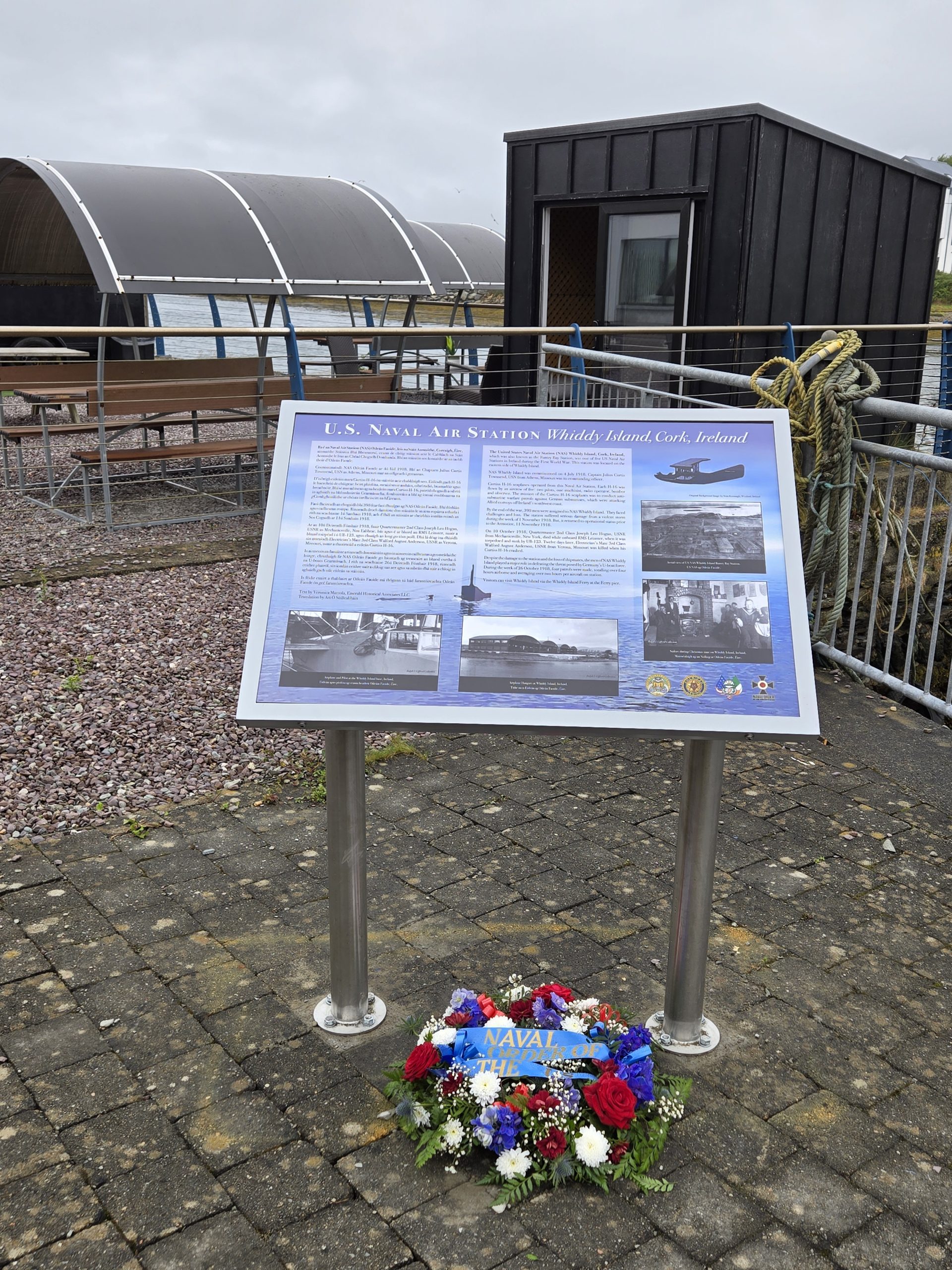
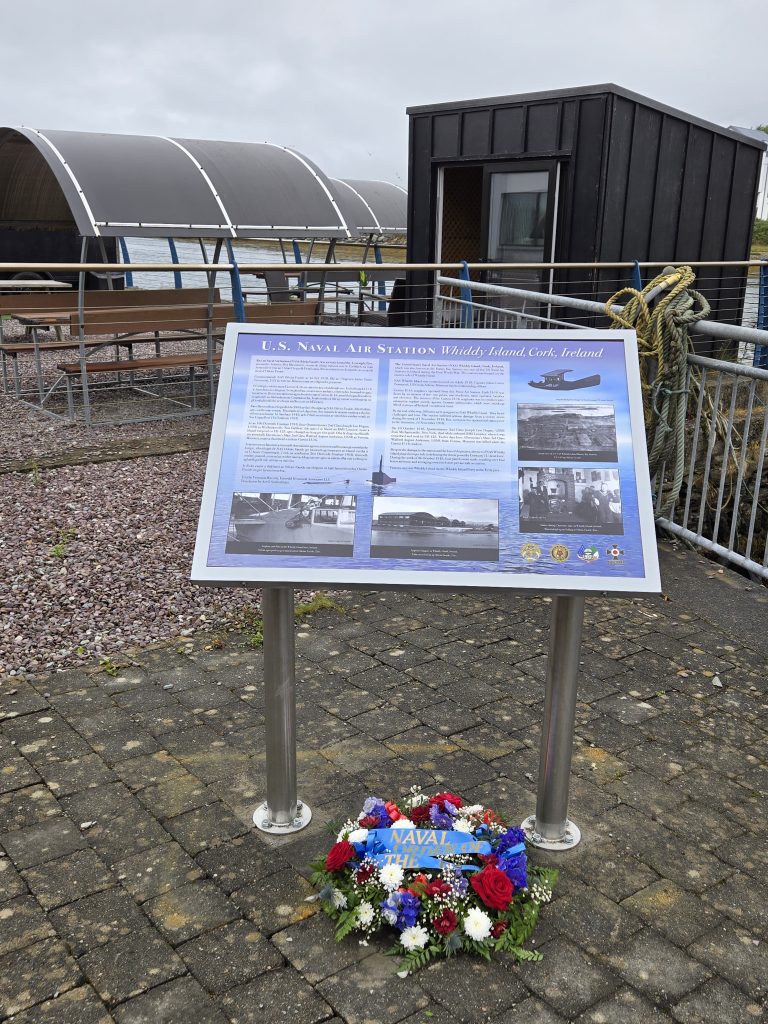
On 12 September, a new memorial plaque honouring the U.S. Naval Air Station Whiddy Island was unveiled in Bantry. The ceremony was hosted by the Naval Order of the United States, which is leading a national programme to commemorate all five American WWI naval air stations established in Ireland.
The event included a moving performance by pupils from Gaelscoil Bheanntraí, who sang the national anthems of Ireland and the United States. The unveiling was also attended by local politicians, highlighting the importance of Whiddy Island’s WWI heritage to Bantry and the wider West Cork region. A reception followed at The Maritime Hotel, overlooking Whiddy Island.
🇺🇸 America Enters the Great War
When the First World War began in 1914, the United States remained neutral. But by early 1917, Germany’s campaign of unrestricted submarine warfare had pushed the Atlantic into crisis. German U‑boats were sinking enormous volumes of merchant shipping — over 500,000 tons per month — much of it in the waters surrounding Ireland. The sinking of RMS Lusitania and the Zimmermann Telegram ultimately led the United States to declare war on Germany on 6 April 1917.
The U‑Boat Threat and Ireland’s Strategic Importance
Ireland’s southern and western coasts sat directly on the shipping lanes feeding Britain and France. These waters became known as “U‑boat Alley.” Admiral William Sims warned Washington that Britain could lose the war if U‑boat losses continued. In response, the U.S. Navy deployed forces to Ireland to help defend the Western Approaches.
Establishing the U.S. Naval Air Stations in Ireland
In 1918, the United States established five Naval Air Stations in Ireland:
- Whiddy Island (Bantry Bay)
- Aghada (Cork Harbour)
- Queenstown (Cobh)
- Wexford
- Lough Foyle (Co. Donegal)
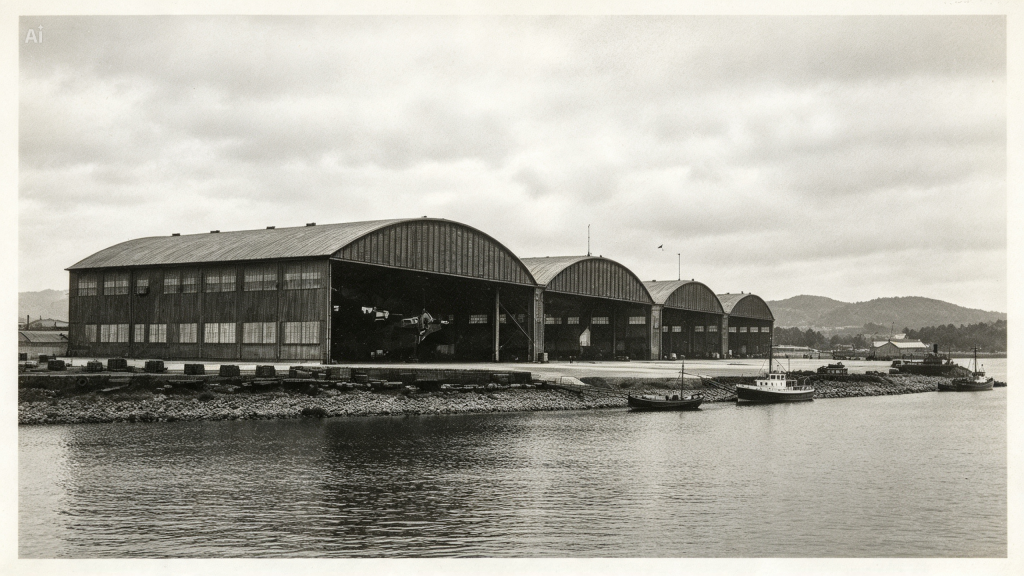
These stations operated Curtiss H‑16 flying boats, each crewed by five men. Their mission was to fly anti‑submarine patrols, escort convoys, and attack German submarines threatening Allied supply and troop movements.
🌊 NAS Whiddy Island
Commissioned on 4 July 1918, NAS Whiddy Island quickly grew to 396 personnel. From Bantry Bay, its Curtiss H‑16 seaplanes flew long patrols over the Atlantic, protecting convoys entering and leaving the Western Approaches. Despite severe storms and tragic losses — including the sinking of RMS Leinster and a fatal aircraft crash — Whiddy’s aircrews continued flying until the Armistice on 11 November 1918.
⚓ The Naval Order of the United States
Founded in 1893, the Naval Order of the United States is America’s oldest hereditary naval society. Its mission is to preserve naval history, honour those who served at sea, and promote public understanding of maritime heritage. The plaque unveiled in Bantry is part of a wider initiative to mark each of Ireland’s WWI U.S. Naval Air Stations, strengthening historic ties between Ireland and the United States.